
Name:Hanks wu
Position:Engineer
Date: August 16, 2026
Understanding Molecular Identity, Research Evidence, Analytical Documentation and Manufacturer-Direct Supply
Research-use notice: The material discussed on this page is intended exclusively for qualified laboratory research and analytical applications. It is not intended for human consumption, clinical use, diagnosis, treatment, drug compounding or veterinary use.
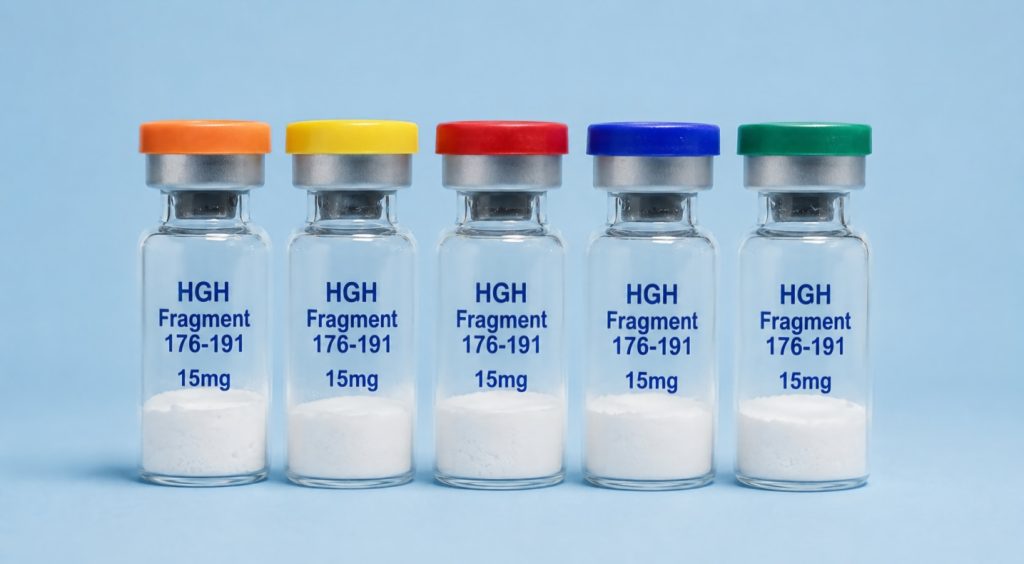
HGH Fragment 176–191 has attracted considerable attention in peptide research, particularly in studies involving the C-terminal region of human growth hormone, adipose-tissue biology, peptide characterization and metabolic signalling.
Online descriptions, however, are often inconsistent. Some sources use the names HGH Fragment 176–191 and AOD9604 interchangeably, while others describe different amino-acid sequences, molecular formulas or chemical forms.
For professional B2B purchasers, this creates a more important question than any online benefit claim:
What molecular material is actually contained in the supplied vial, and what analytical evidence confirms its identity?
This guide examines the research background, the limitations of online reviews and the quality documentation that laboratories should evaluate before purchasing HGH Fragment 176–191 research material.
What Is HGH Fragment 176–191?
Human growth hormone is a 191-amino-acid protein. HGH Fragment 176–191 refers generally to a short peptide associated with the C-terminal region of the full hormone. FDA-approved recombinant human growth-hormone products contain the complete 191-amino-acid sequence, whereas a fragment contains only a small portion of that structure.
The simplified product name can nevertheless create ambiguity.
Public databases and commercial reference catalogues list more than one molecular formula or sequence under closely related HGH Fragment names. AOD9604 is also frequently described as a related modified C-terminal fragment rather than an automatically identical molecule. FDA documentation characterizes AOD9604 as hGH residues 177–191 with an additional N-terminal tyrosine.
A qualified buyer should therefore never rely on the product name alone.
The requested specification should define:
- Complete amino-acid sequence
- N-terminal and C-terminal chemistry
- Disulfide-bond configuration
- Free-base, acetate or other supplied form
- Molecular formula
- Expected molecular mass
- Peptide content
- Purity method and acceptance criteria
These details should agree across the quotation, label, specification sheet, Certificate of Analysis and mass-spectrometry report.
Why Is HGH Fragment 176–191 Studied?
Research interest in the C-terminal region of human growth hormone originated from studies examining whether selected hormone fragments could be investigated separately from the full protein.
Potential non-clinical research areas include:
- Peptide structure and sequence confirmation
- Lipid-metabolism pathway studies
- Adipocyte and cellular-response models
- Peptide degradation and stability studies
- Chromatographic method development
- Mass-spectrometric identification
- Comparative fragment analysis
- Formulation compatibility
- Reference-material qualification
- Peptide–carrier and nanoparticle research
A 2022 laboratory study also evaluated HGH Fragment 176–191 in an in-vitro nanoparticle and breast-cancer-cell model. This illustrates the diversity of possible laboratory research but does not establish a clinical treatment effect.
The purchasing laboratory remains responsible for determining whether a supplied batch is suitable for its specific method and research protocol.
What Does the Metabolic Research Actually Show?

The evidence should be separated into three different categories:
1. Studies of native or closely related hGH fragments
Early animal research examined several C-terminal human growth-hormone fragments. One rat study reported temporary changes in glucose and insulin after administration of fragments including hGH 176–191.
Another study of hGH 177–191 reported an antilipogenic effect under its experimental conditions but did not find a statistically significant lipolytic effect based on glycerol release from rat adipose tissue.
These findings demonstrate why the fragment is scientifically interesting, but they do not establish a proven weight-management product for humans.
2. Preclinical research involving AOD9604 or AOD-9401
Animal studies involving AOD9604 or related development codes reported changes in fat oxidation, lipolytic sensitivity and weight gain in obese rodent models.
However, AOD9604 is a specifically defined modified peptide. Its results should not be transferred automatically to every product sold under the broader name “HGH Fragment 176–191.”
3. Human development data involving AOD9604
Clinical-development records state that AOD9604 was investigated for obesity and that several human trials were conducted. The later efficacy study did not meet its primary endpoint, and development for that indication was discontinued.
This distinction is essential for responsible scientific communication.
The available evidence supports continued laboratory investigation of GH-derived fragments. It does not support describing HGH Fragment 176–191 as an approved, clinically established or guaranteed fat-loss treatment.
HGH Fragment 176–191 Is Not Full-Length HGH
A short HGH fragment should not be described as though it were full-length recombinant human growth hormone.
The full hormone contains 191 amino-acid residues and has a substantially different molecular structure. A small C-terminal fragment cannot be assumed to reproduce all the receptor interactions, biological activities, pharmacokinetics or safety characteristics of the complete hormone.
Similarly, the absence of the full protein does not prove that a fragment is free from biological activity or risk.
For B2B laboratories, accurate terminology is therefore important:
- “C-terminal human growth-hormone fragment research peptide” is appropriate.
- “Human growth hormone medicine” is not appropriate.
- “Investigated in metabolic research” is appropriate.
- “Clinically proven fat-burning HGH” is not appropriate.
What Can Online Reviews Tell Researchers?

Online discussions about HGH Fragment 176–191 include both positive and negative reports.
Some individuals claim that they experienced changes in body weight or composition without obvious subjective adverse effects. Other users report minimal results, poor value, local reactions, nausea or uncertainty about whether the purchased material contained the expected peptide.
These accounts may help suppliers understand market questions, but they are not controlled scientific evidence.
In most online reports, it is impossible to verify:
- Product identity
- Actual peptide content
- Purity and related impurities
- Counterion or salt form
- Storage history
- Reconstitution conditions
- Microbial or endotoxin status
- Other substances used simultaneously
- Diet and activity conditions
- Accuracy of self-reported outcomes
Contradictory reviews should not be resolved by making stronger promotional claims.
They should instead encourage more rigorous analytical verification.
Nine Questions a B2B Buyer Should Ask
1. What is the exact amino-acid sequence?
The sequence should be written in full. The buyer should confirm whether the first residue is phenylalanine, tyrosine or another modification.
This is necessary to distinguish the requested material from related GH fragments and AOD9604-type analogues.
2. What molecular form is supplied?
The supplier should disclose whether the material is a free peptide, acetate salt or another form. Counterions and water content can affect the reported molecular formula and net peptide content.
3. Does the mass spectrum match the expected structure?
Mass spectrometry is an essential identity tool. The expected molecular ion, observed mass and interpretation should correspond to the stated sequence and chemical form.
4. Is the HPLC result batch-specific?
“High purity” is not a sufficient specification.
The buyer should request a batch-linked chromatogram showing:
- Batch number
- Test date
- Analytical method
- Detection wavelength
- Main-peak integration
- Related peaks
- Reported purity
- Analyst or quality release information
5. Is purity being confused with peptide content?
An HPLC area percentage does not automatically prove the amount of active peptide present in a vial.
Water, counterions, residual solvents and other non-UV-detected components may affect net peptide content. Laboratories requiring quantitative material should discuss an appropriate content or assay method.
6. Are specifications consistent across all documents?
The vial label, website, quotation, COA and SDS should not contain conflicting formulas, names, quantities or purity values.
Any discrepancy should be resolved before shipment.
7. How is the material protected during storage and shipping?
Peptide quality can be affected by temperature, moisture, oxidation and repeated handling.
The supplier should define the storage condition, packaging system and procedure for managing transportation deviations. The batch-specific instructions should control over general website statements.
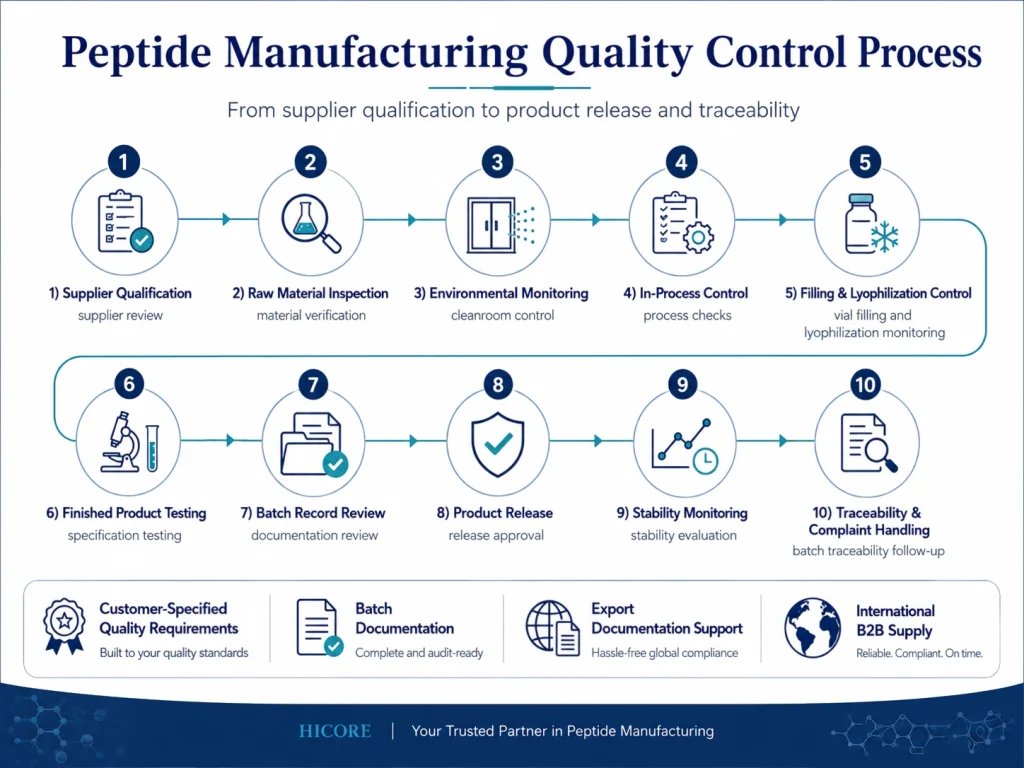
8. Is the supply chain traceable?
Professional buyers may require:
- Raw-material traceability
- Production batch numbers
- Retained samples
- Change-control notification
- Deviation management
- Repeat-batch comparison
- Document version control
- Complaint and investigation procedures
9. Is the intended use clearly restricted?
Research-grade material should be supplied with an unambiguous statement that it is not intended for human consumption, clinical treatment, diagnosis, drug compounding or veterinary use.
Competitive athletes should also be aware that the 2026 World Anti-Doping Agency Prohibited List specifically includes growth-hormone fragments such as AOD9604 and hGH 176–191.
HICORE LIFE HGH Fragment 176–191 Research Material
HICORE LIFE supplies HGH Fragment 176–191 for qualified laboratory, analytical and product-development organizations.
Current catalogue specifications include:
- 2 mg per vial
- 5 mg per vial
- 10 mg per vial
- 15 mg per vial
- 10 vials per box
The current minimum order is listed as 100 boxes or 1,000 vials. Final availability, sequence, chemical form and analytical specification must be confirmed during quotation.
Available batch documentation may include:
- Certificate of Analysis
- HPLC report and chromatogram
- Mass-spectrometry report
- Safety Data Sheet
- Product specification sheet
- Batch and packaging information
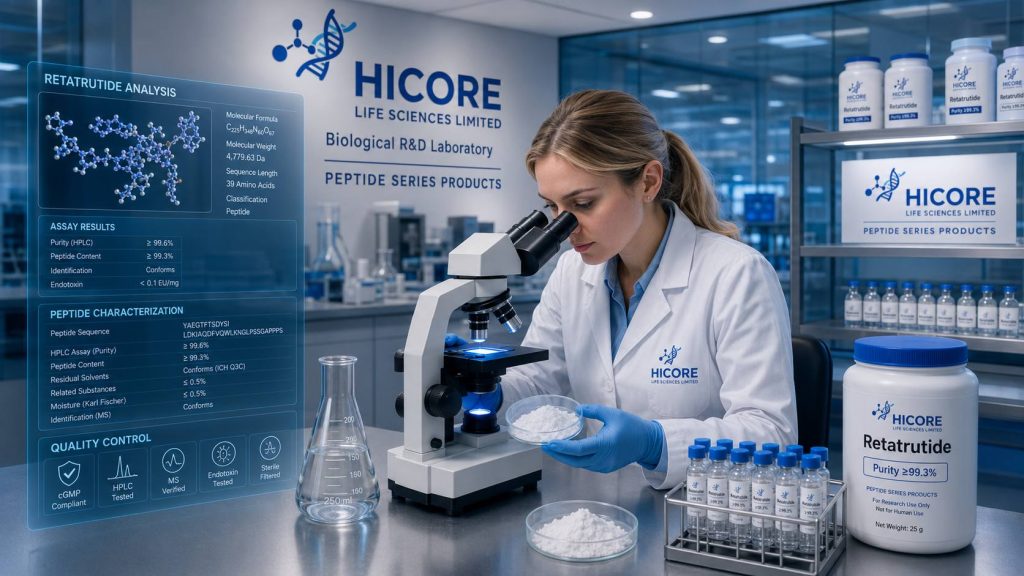
The released batch documents are the controlling records. Website information should be reconciled with the final COA and MS report before the material is approved for laboratory use.
Manufacturer-Direct Research Peptide Supply
With 15 years of peptide-production experience, HICORE LIFE focuses on manufacturer-direct support for research institutions, analytical laboratories, distributors and product-development companies.
Our B2B supply capabilities may include:
- Multiple vial specifications
- Bulk research-peptide production
- Batch-controlled manufacturing
- Custom labeling and packaging
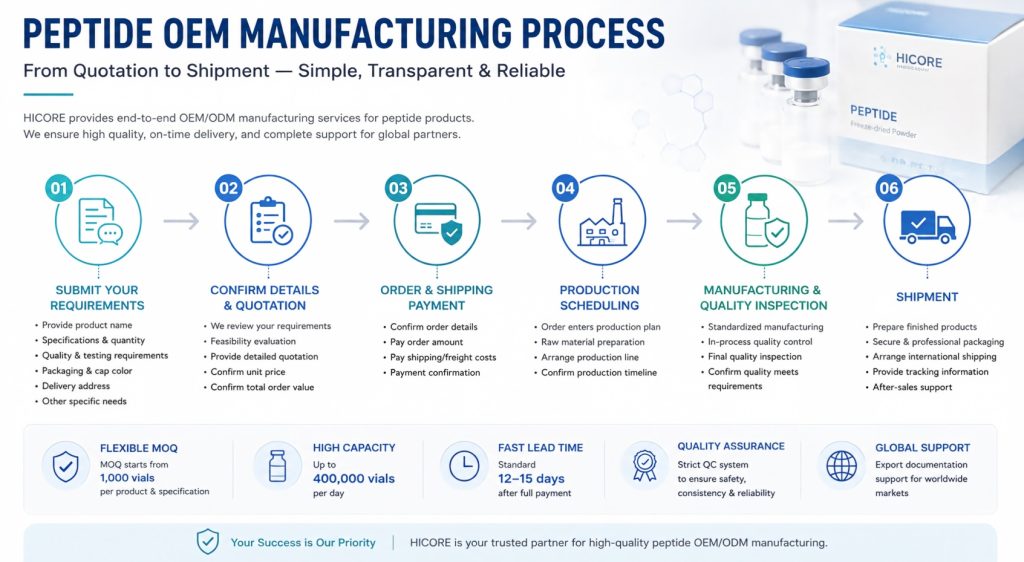
- OEM and ODM project support
- Pre-purchase analytical-document review
- Qualification samples
- Repeat-order coordination
- Technical and commercial documentation
- Export and destination-document support
For long-term purchasers, manufacturer-direct cooperation can provide better control over specifications, batch communication, packaging requirements and repeat-order consistency.
All manufacturing-history, quality-system and production-capability statements should be supported by verifiable facility records, quality documents and company information during customer qualification.
View the Official Product Page
Qualified B2B buyers can review available specifications and submit a documentation or quotation request through the official HGH Fragment 176–191 product page:
For a more accurate quotation, please include:
- Required amino-acid sequence
- Required chemical or salt form
- Vial content
- Total quantity
- Target purity
- Required analytical methods
- Destination country
- Packaging configuration
- Labeling requirements
- Expected procurement schedule
Frequently Asked Questions
Is HGH Fragment 176–191 the same as full-length HGH?
No. Full-length human growth hormone contains 191 amino acids. HGH Fragment 176–191 is a short peptide associated with the C-terminal region and should not be described as equivalent to the complete hormone.
Is HGH Fragment 176–191 identical to AOD9604?
Not necessarily. The names are frequently mixed in online content, but the exact amino-acid sequence and molecular form must be confirmed. AOD9604 is commonly defined as hGH 177–191 with an additional N-terminal tyrosine.
Has HGH Fragment 176–191 been proven to reduce human body fat?
No definitive conclusion should be made. Much of the positive metabolic evidence comes from animal studies or research involving the related AOD9604 molecule. Later AOD9604 human development did not achieve the required primary efficacy endpoint for obesity.
What documents should a professional buyer request?
At minimum, buyers should consider requesting a batch COA, original HPLC chromatogram, MS identity report, SDS and full product specification.
Does 99% HPLC purity confirm the complete quality of a peptide?
No. HPLC purity is important, but it does not independently confirm molecular identity, net peptide content, counterion level, residual solvents, water content, endotoxin status or suitability for a specific method.
Is the product intended for human use?
No. It is supplied exclusively for qualified laboratory research and analytical applications.
Conclusion
HGH Fragment 176–191 remains an interesting subject for peptide characterization, metabolic-pathway research and analytical-method development.
Its commercial market also illustrates an important scientific principle: a familiar product name is not enough to establish molecular identity or quality.
Professional buyers should concentrate on evidence that can be reviewed and reproduced:
- Defined amino-acid sequence
- Confirmed molecular mass
- Batch-specific HPLC data
- Traceable analytical documentation
- Consistent product specifications
- Controlled storage and transportation
- Transparent research-use restrictions
HICORE LIFE supports qualified B2B customers with manufacturer-direct peptide supply, multiple specifications, custom packaging and batch-related analytical documentation.
For laboratory research use only. Not for human consumption, clinical use, diagnosis, treatment, drug compounding or veterinary use.