

Position: Engineer
Date: October 6, 2026
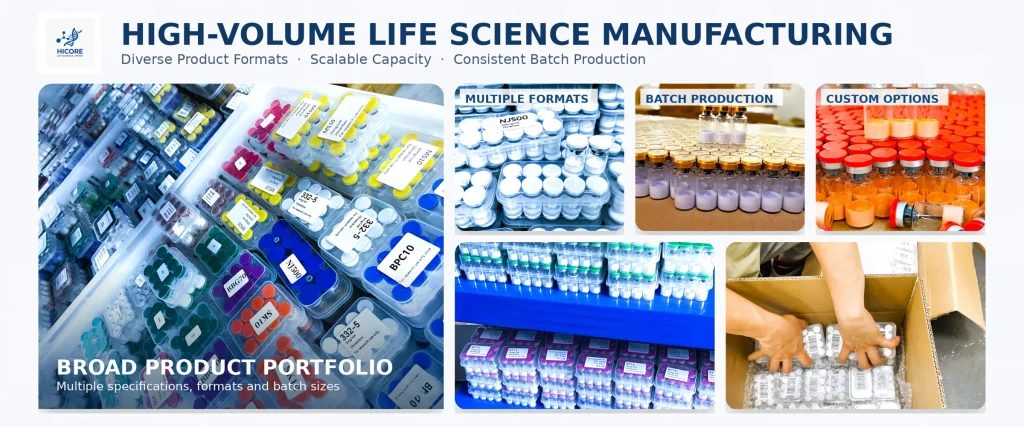
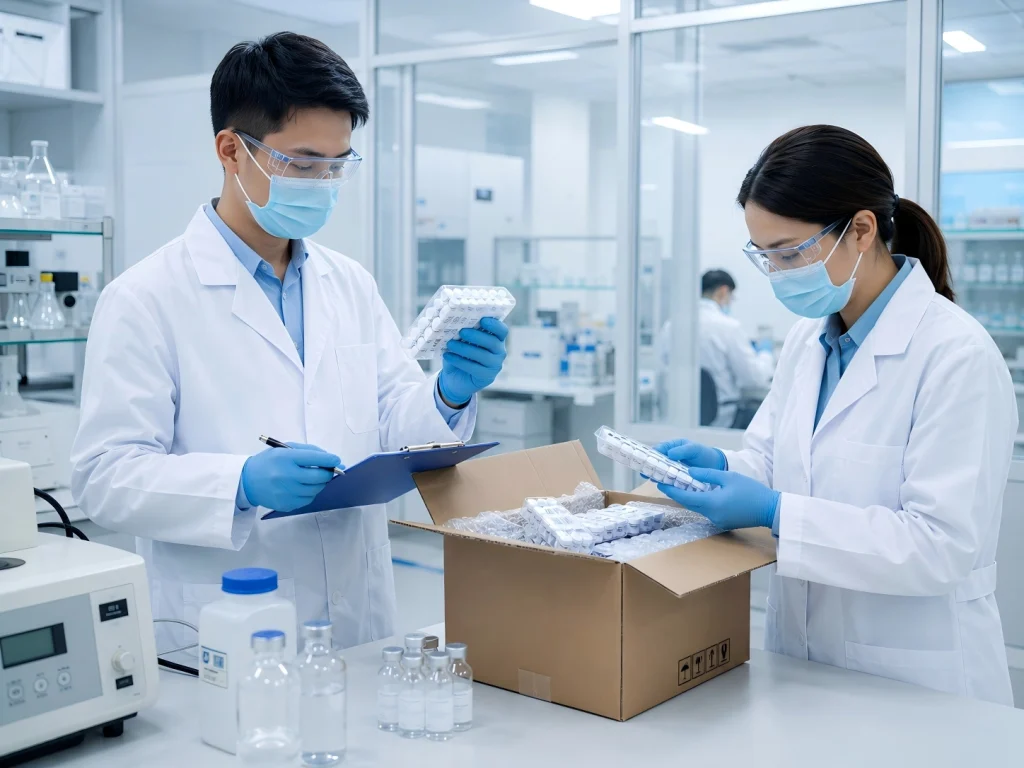
HICORE Life Sciences manufacturing facility supporting peptide research, production, OEM/ODM projects, and international B2B supply.
HGH, short for human growth hormone, is one of the most widely recognized protein hormones in endocrine and biochemical research.
In scientific literature, recombinant forms of human growth hormone are commonly associated with the name somatropin. Because HGH is a biologically active protein rather than a conventional small-molecule chemical, evaluating a research material requires more than simply checking a product name or nominal purity figure.
For laboratories, distributors, research organizations and technical sourcing teams, the most useful questions are usually more practical:
What exactly is the material?
How has its identity been verified?
What analytical methods were used?
Is batch-specific documentation available?
How should the material be handled and stored?
Can the supplier provide consistent technical records from one batch to another?
This guide explains the major points B2B research teams should review when evaluating HGH or somatropin research materials.
What Is HGH?

Human growth hormone is a peptide/protein hormone naturally produced by the anterior pituitary gland.
In research contexts, the abbreviation HGH is commonly used alongside several related terms, including:
- human growth hormone
- GH
- recombinant human growth hormone
- rhGH
- somatropin
These terms frequently appear together in scientific databases, technical specifications and search queries.
For SEO purposes, this is important because a laboratory researcher may search for “HGH,” while a technical buyer or scientific team may instead search for “somatropin,” “recombinant human growth hormone” or “rhGH.”
A well-structured technical page should therefore explain the terminology clearly rather than treating each term as an unrelated product keyword.
HGH and Somatropin: Understanding the Terminology
Somatropin generally refers to recombinant human growth hormone produced using biotechnology.
Recombinant production makes it possible to manufacture proteins with a defined amino-acid sequence for scientific, analytical and regulated pharmaceutical applications.
For a research organization, however, a product name alone does not establish material identity or suitability.
Before using an HGH research material, technical teams should evaluate supporting documentation such as:
- product specification
- Certificate of Analysis
- analytical method information
- chromatographic data where available
- batch or lot identification
- storage conditions
- handling information
- SDS or related safety documentation
This documentation helps laboratories determine whether a material matches the requirements of a particular analytical or research workflow.
Why Analytical Characterization Matters for HGH Research
Protein materials are more complex than many conventional research chemicals.
Their quality may be influenced by factors including molecular structure, aggregation, degradation, oxidation, storage conditions and manufacturing history.
For this reason, researchers should avoid evaluating HGH solely through a single headline purity percentage.
A more useful approach is to review the complete analytical profile.
HPLC Analysis
High-performance liquid chromatography, or HPLC, is widely used in peptide and protein analysis.
Depending on the method, HPLC can help researchers evaluate chromatographic purity and detect certain impurities or degradation-related peaks.
When reviewing an HGH HPLC result, B2B technical teams should consider:
- whether the result is batch-specific
- whether the chromatogram corresponds to the supplied lot
- which analytical method was used
- whether acceptance criteria are clearly defined
- whether the reported result matches the Certificate of Analysis
An isolated statement such as “high purity” provides less information than a documented batch result supported by analytical records.
Identity Confirmation
Identity testing is another important part of HGH research material evaluation.
Depending on the laboratory and application, identity may be investigated through techniques such as mass-based analysis, chromatographic comparison or other protein characterization methods.
Technical buyers should ask whether identity confirmation is part of the supplier’s quality documentation rather than assuming identity based only on labeling.
What Should an HGH Certificate of Analysis Include?
For many B2B research customers, the Certificate of Analysis is one of the first documents reviewed.
A useful HGH COA should clearly identify the batch and summarize relevant analytical results.
Typical information may include:
- product name
- batch or lot number
- analytical test items
- specifications
- actual batch results
- test methods
- storage recommendations
- document approval or release information
The exact format varies between laboratories and manufacturers.
The important point is traceability.
A COA should describe the actual tested batch rather than functioning only as a generic marketing sheet.
Why Batch-Specific Documentation Matters
Research laboratories frequently need reproducibility.
If two projects use material from different batches, analytical records help researchers determine whether batch variation could influence experimental observations.
This is especially important for protein and peptide materials.
For that reason, technical sourcing teams often search for phrases such as:
“HGH COA”
“somatropin Certificate of Analysis”
“HGH batch testing”
“human growth hormone HPLC”
“somatropin analytical data”
These searches reflect a different intent from consumer searches. The user is often evaluating technical documentation rather than looking for general information about the hormone.
Important Documentation for HGH Research Materials
A complete technical information package may contain several documents.
Certificate of Analysis
The COA summarizes batch-specific testing and specification results.
Specification Sheet
A specification sheet defines expected quality criteria and product characteristics.
Safety Data Sheet
An SDS provides handling, storage and safety-related information relevant to laboratory environments.
Analytical Data
Depending on the material and supplier, supporting analytical information may include chromatograms or additional characterization data.
Storage Information
Storage requirements should be clearly stated because proteins may be sensitive to environmental conditions.
Technical teams should always follow the documented storage requirements associated with the specific supplied material.
Storage and Handling Considerations
Protein stability is an important consideration in HGH research.
Environmental conditions such as temperature, moisture, repeated handling and inappropriate storage can potentially affect protein quality.
Good laboratory practice therefore includes:
- reviewing storage instructions before receipt
- recording material arrival conditions
- maintaining lot traceability
- minimizing unnecessary environmental exposure
- following laboratory procedures for handling protein materials
- documenting storage history when relevant
Researchers should rely on the storage instructions provided for the specific research material rather than applying assumptions from unrelated formulations.
HGH Research Material Versus Pharmaceutical Product
This distinction is particularly important.
A research material and an approved pharmaceutical product are not automatically interchangeable.
Pharmaceutical somatropin products are regulated medicines manufactured, labeled and distributed under specific regulatory requirements. FDA-regulated somatropin products, for example, have approved indications and prescribing information.
Research materials may instead be supplied for analytical, laboratory or development purposes.
The intended use, regulatory status and documentation should therefore be clearly identified.
Research customers should never assume that a laboratory material is approved for administration to humans.
This distinction protects both scientific integrity and regulatory compliance.
Questions B2B Research Teams Should Ask
Before evaluating a potential HGH research material, technical teams may want to ask the following questions.
1. Is Batch-Specific COA Documentation Available?
Request documentation linked directly to the supplied lot.
2. What Analytical Methods Are Used?
Understand how purity and identity are evaluated.
3. Is Supporting Analytical Data Available?
Where appropriate, review chromatographic or related characterization information.
4. What Are the Storage Requirements?
Confirm storage conditions before ordering or receiving research materials.
5. Can the Material Be Traced by Batch?
Batch traceability is important for repeat research programs.
6. Are Technical Documents Available Before Project Evaluation?
Early document review can help avoid sourcing delays later.
7. Can Different Research Quantities Be Supported?
Laboratories may move from initial evaluation to larger research programs. Understanding scale capabilities helps with project planning.
How B2B Buyers Search for HGH Research Information
Industrial and laboratory buyers often use more specific Google searches than general consumers.
Examples include:
- HGH research material
- human growth hormone research
- somatropin research material
- recombinant human growth hormone research
- HGH COA
- HGH HPLC analysis
- somatropin analytical data
- HGH specification
- HGH quality documentation
- recombinant HGH characterization
These phrases reveal an important SEO principle.
B2B visitors are usually trying to reduce uncertainty.
They want technical information that helps answer questions about identity, documentation, consistency and project suitability.
For that reason, an effective HGH technical page should provide substantive information instead of repeating the keyword “HGH” excessively.
Building a Technical Evaluation Workflow
A practical evaluation process can be divided into several stages.
Step 1: Define the Research Requirement
Identify the intended laboratory or analytical application.
Step 2: Review Material Identity
Confirm terminology, product identity and available specifications.
Step 3: Review Documentation
Examine the COA, specification sheet, safety documentation and available analytical data.
Step 4: Evaluate Batch Traceability
Confirm that the documentation corresponds to the actual supplied lot.
Step 5: Review Storage Requirements
Ensure that internal facilities and procedures can support the required storage conditions.
Step 6: Conduct Internal Qualification
Qualified laboratories should determine whether the material meets the requirements of their own research program.
Why Documentation Is Becoming More Important in B2B Peptide and Protein Research

Modern research sourcing increasingly depends on documentation.
A product listing may help a customer discover a material, but technical documentation helps determine whether the material deserves further evaluation.
This is particularly relevant for protein and peptide research, where analytical complexity is greater than for many standard laboratory chemicals.
As a result, suppliers serving professional research organizations benefit from presenting information in a structured way:
Product identity first.
Analytical characterization second.
Batch-specific documentation third.
Research support fourth.
Commercial discussion should come only after the scientific and documentation requirements are understood.
HGH Research Information at HICORE Life Sciences
HICORE Life Sciences organizes its peptide and protein research information around product identification, analytical characterization and supporting quality documentation.
Researchers evaluating HGH (Somatropin) can review the available product information and request relevant technical documentation for research assessment.
INTERNAL LINK 1 — PLACE HERE
Anchor text: HGH (Somatropin) research material
Link to: the HGH product detail page on glp1hghpeptides.com
Suggested sentence:
Researchers can review the available technical information for our HGH (Somatropin) research material before discussing documentation requirements for a research program.
INTERNAL LINK 2 — PLACE HERE
Anchor text: quality documentation and Certificates of Analysis
Link to: your Quality Documentation / COA page
Suggested sentence:
For information about document availability and batch records, see our quality documentation and Certificates of Analysis resources.
INTERNAL LINK 3 — PLACE HERE
Anchor text: peptide analytical characterization capabilities
Link to: your Capabilities page
Suggested sentence:
Research teams can also review our peptide analytical characterization capabilities for information about technical and analytical support.
Frequently Asked Questions About HGH Research Materials
What does HGH stand for?
HGH stands for human growth hormone.
Is somatropin the same as HGH?
Somatropin is a term commonly used for recombinant human growth hormone.
Why is a COA important for HGH research?
A Certificate of Analysis provides batch-specific information about analytical testing and specifications, helping laboratories evaluate traceability and consistency.
What does HPLC tell researchers about HGH?
HPLC can provide information about chromatographic purity and related material characteristics depending on the method used.
Should researchers rely only on an HPLC purity percentage?
No. A broader review of identity, analytical data, specifications, batch traceability and storage information provides a more complete quality assessment.
Is research HGH the same as an approved pharmaceutical product?
Not necessarily. Research materials and approved medicines have different intended uses and regulatory requirements. Research materials should not be assumed to be approved for human administration.
Final Thoughts
HGH is a technically complex research material.
For professional research organizations, the most important evaluation criteria extend well beyond a product name or headline purity figure.
A strong technical review should consider identity, analytical characterization, batch-specific COA documentation, supporting specifications, storage requirements and traceability.
For laboratories and B2B research teams, this documentation-centered approach creates a stronger foundation for material evaluation and reproducible scientific work.
Research teams evaluating HGH, somatropin or recombinant human growth hormone materials should begin with the technical documentation and determine whether the available analytical information matches the requirements of their specific research program.
EDITORIAL NOTE
This article is intended for scientific, analytical and research information only. It does not provide medical advice, prescribing guidance or instructions for human administration.