
Name: Hanks wu
Position: Engineer
Date: October 6, 2026
Understanding GIP, GLP-1 and Glucagon Triple-Receptor Research and Laboratory Quality
Research-use notice: HICORE LIFE SCIENCES Retatrutide is supplied solely for qualified laboratory research and analytical applications. It is not intended for human consumption, clinical use, diagnosis, treatment, drug compounding or veterinary use.
Retatrutide, also known by the development code LY3437943, has become one of the most closely watched molecules in metabolic peptide research.
Unlike single-receptor GLP-1 agonists or dual GIP/GLP-1 receptor agonists, retatrutide is designed as a triple GIP, GLP-1 and glucagon receptor agonist. This distinctive receptor profile has generated substantial interest in obesity, metabolic signaling, glucose regulation and related research.
For laboratories and professional research organizations, however, understanding the biological science is only one part of working with a research peptide. Molecular identity, analytical purity, batch documentation, storage control and reproducibility are equally important.
What Is Retatrutide?
Retatrutide is an investigational peptide developed to activate three metabolic hormone receptors:
- Glucose-dependent insulinotropic polypeptide receptor — GIP
- Glucagon-like peptide-1 receptor — GLP-1
- Glucagon receptor
Because all three receptor systems are incorporated into a single molecular design, retatrutide is commonly described as a triple receptor agonist or triple agonist.
The development name for retatrutide is LY3437943.
Its multi-receptor activity has made the molecule an important research target for laboratories investigating:
- GIP receptor signaling
- GLP-1 receptor signaling
- Glucagon receptor signaling
- Triple-receptor pharmacology
- Metabolic pathway interactions
- Peptide structure and characterization
- Stability and degradation
- Analytical method development
The informal term “GLP-3” is sometimes used online, but retatrutide is more accurately described scientifically as a GIP/GLP-1/glucagon triple receptor agonist.
Why Is Retatrutide Receiving So Much Research Attention?
Interest in retatrutide has accelerated as Phase 3 clinical research has progressed.
In 2026, Eli Lilly reported results from several pivotal Phase 3 studies investigating retatrutide in obesity, overweight, type 2 diabetes and obesity-related complications.
TRIUMPH-1 evaluated adults with obesity or overweight without diabetes. Lilly reported that participants receiving the 12 mg study dose experienced an average body-weight reduction of 28.3% at 80 weeks.
TRIUMPH-2 investigated adults with obesity or overweight and type 2 diabetes. Lilly reported an average weight reduction of up to 20.8% at 80 weeks together with improvements in A1C.
Other clinical programs are evaluating the molecule in areas including obstructive sleep apnea, knee osteoarthritis pain, cardiovascular and renal outcomes and metabolic dysfunction-associated steatotic liver disease.
These results relate to regulated clinical studies conducted by the drug developer. They should not be interpreted as demonstrating that independently manufactured research materials are approved medicines or clinically interchangeable with investigational pharmaceutical products.
Is Retatrutide FDA Approved?
No.
As of October 2026, retatrutide remains an investigational medicine and has not been approved by the FDA for public use.
Eli Lilly has stated that it plans to submit a regulatory application for retatrutide to the FDA in the first quarter of 2027.
Regulatory status is particularly important when evaluating information found online. Researchers should distinguish among:
- The investigational pharmaceutical product used in controlled clinical trials.
- Analytical or laboratory research materials supplied for qualified research.
- Unverified products marketed online for consumer use.
These categories are not equivalent.
HICORE LIFE SCIENCES supplies retatrutide material for qualified laboratory research only.
Retatrutide in Triple-Receptor Research
The three-receptor architecture makes retatrutide particularly interesting for comparative metabolic research.
GIP Receptor Research
GIP is an incretin hormone involved in nutrient-responsive signaling. Researchers may investigate how GIP receptor activation interacts with other metabolic pathways.
GLP-1 Receptor Research
GLP-1 receptor signaling has become a major field of metabolic research. It is involved in glucose-dependent signaling, appetite-related pathways and gastrointestinal physiology.
Glucagon Receptor Research
Glucagon signaling is associated with hepatic metabolism and energy regulation.
Combining GIP, GLP-1 and glucagon receptor activity in a single molecular platform creates opportunities to study receptor interactions that cannot be evaluated in the same way with single-receptor molecules.
Retatrutide vs Tirzepatide: What Is the Research Difference?
Retatrutide and tirzepatide are frequently compared in online searches, but their receptor profiles differ.
Tirzepatide is a dual GIP/GLP-1 receptor agonist.
Retatrutide is designed to activate GIP, GLP-1 and glucagon receptors.
The additional glucagon receptor component is therefore one of the main pharmacological distinctions between the two molecules.
A Phase 3 study known as TRIUMPH-5 has also been designed to compare retatrutide with tirzepatide in adults with obesity. Researchers should rely on completed study data and peer-reviewed publications rather than assuming outcomes before comparative results are available.
Why Batch Quality Matters in Retatrutide Research
In analytical and laboratory applications, a familiar molecule name does not by itself establish research quality.
Results can be influenced by:
- Incorrect molecular identity
- Peptide degradation
- Oxidation or other related substances
- Inaccurate vial content
- Improper storage
- Transportation temperature exposure
- Variation between production batches
- Inadequate analytical characterization
For this reason, professional laboratories should evaluate batch-specific documentation rather than relying only on a product label or stated percentage purity.
Important Analytical Documents
Certificate of Analysis
A batch-specific Certificate of Analysis (COA) should identify the material, batch and relevant analytical results.
HPLC Chromatogram
High-performance liquid chromatography can support evaluation of peptide purity and related substances.
HPLC percentage alone, however, should not automatically be interpreted as complete confirmation of peptide identity or net peptide content.
Mass Spectrometry
Mass spectrometry provides additional evidence supporting molecular identity by comparing measured molecular mass with the expected structure.
Safety Data Sheet
An SDS provides laboratory handling, storage and safety information relevant to the research material.
Product Specification
Specifications help research organizations compare defined requirements with released batch characteristics.
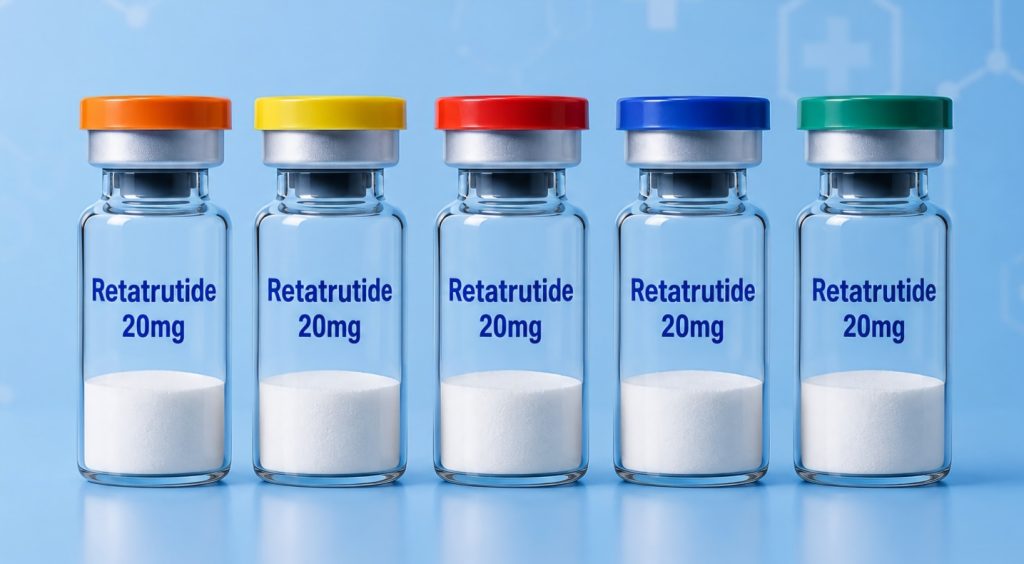
HICORE LIFE Retatrutide Research Material
HICORE LIFE SCIENCES supplies Retatrutide research peptide for qualified laboratory and analytical applications.
Current catalogue information includes:
- Product: Retatrutide
- Synonym: LY3437943
- Category: Triple Receptor Agonists
- CAS: 2381089-83-2
- Purity: ≥99.6% by HPLC, subject to the released batch COA
- Appearance: White to off-white lyophilized powder, subject to batch confirmation
- Available research specifications: 5 mg, 10 mg, 15 mg, 20 mg, 22 mg, 24 mg, 30 mg, 36 mg, 40 mg, 50 mg and 60 mg
- Packaging: 10 vials per box
- Documentation availability: Batch COA, HPLC chromatogram, MS report, SDS and specification sheet where applicable
Final specifications should always be confirmed against the released batch documentation.
What Should Professional Researchers Check Before Qualifying a Retatrutide Batch?
A structured qualification process can improve research consistency.
Researchers and purchasing teams may consider reviewing:
1. Molecular Identity
Confirm that the material is clearly identified as retatrutide / LY3437943 and that the molecular documentation is consistent.
2. Batch-Specific COA
Avoid relying exclusively on generic specification sheets. Analytical results should correspond to the actual supplied batch.
3. HPLC Data
Review the chromatogram as well as the reported purity value where available.
4. Mass-Spectrometry Data
Confirm that analytical identity data correspond to the expected molecule.
5. Storage Conditions
Research peptides should be handled according to validated batch-specific storage requirements.
6. Batch Consistency
For repeat research programs, compare analytical data across multiple production lots.
7. Documentation Traceability
COA, SDS, specifications and analytical reports should clearly identify the relevant material and batch.
Frequently Asked Questions
What is another name for Retatrutide?
Retatrutide is also known by its development identifier LY3437943.
Is Retatrutide a GLP-1 peptide?
Retatrutide has GLP-1 receptor agonist activity, but it is more accurately described as a triple GIP/GLP-1/glucagon receptor agonist.
What makes Retatrutide different from Tirzepatide?
Tirzepatide targets GIP and GLP-1 receptors, while retatrutide is designed to target GIP, GLP-1 and glucagon receptors.
Is Retatrutide currently in Phase 3 research?
Yes. Retatrutide has been evaluated across multiple Phase 3 programs, including the TRIUMPH and TRANSCEND programs.
Is Retatrutide approved for medical use?
No. As of October 2026, retatrutide remains investigational and is not approved for public medical use.
What quality documents are available for HICORE LIFE Retatrutide?
Depending on the selected batch and specification, documentation may include a batch COA, HPLC chromatogram, mass-spectrometry report, SDS and product specification.
Is HICORE LIFE Retatrutide intended for human use?
No. HICORE LIFE Retatrutide is supplied exclusively for qualified laboratory research and analytical applications and is not intended for human or veterinary use.
Conclusion
Retatrutide has become an important research molecule because of its distinctive GIP, GLP-1 and glucagon triple-receptor activity and expanding Phase 3 clinical research program.
For professional laboratories, reliable research depends not only on understanding retatrutide’s receptor pharmacology but also on confirming molecular identity, analytical purity, batch documentation, storage control and lot-to-lot consistency.
HICORE LIFE SCIENCES supports qualified research organizations with Retatrutide research material and batch-specific quality documentation for laboratory and analytical applications.
For laboratory research use only. Not for human consumption, clinical use, diagnosis, treatment, compounding or veterinary use.