
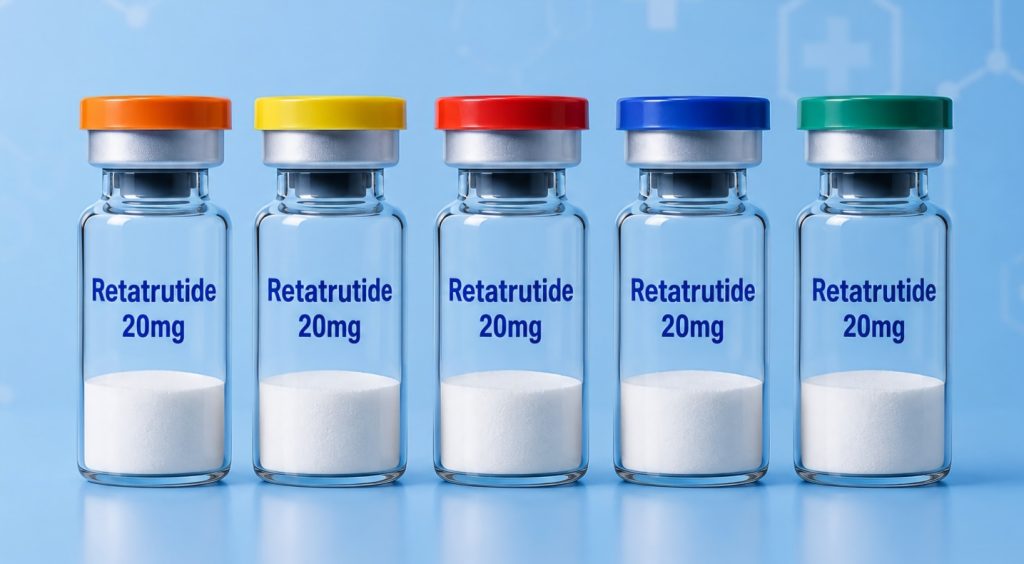
Name:Hanks wu
Position:Engineer
Date: August 16, 2026
How Qualified Buyers Can Evaluate Identity, Purity, Documentation and Manufacturer-Direct Supply
Important research-use notice: The material described on this page is intended exclusively for qualified laboratory research and analytical applications. It is not intended for human consumption, clinical use, diagnosis, treatment, compounding or veterinary use.
Retatrutide, also known by the development code LY3437943, has become an important subject in metabolic pathway and multi-receptor pharmacology research. Unlike single-pathway research compounds, Retatrutide is designed as a single peptide molecule interacting with the GIP, GLP-1 and glucagon receptor systems.
This three-pathway profile has created growing interest among pharmaceutical research teams, analytical laboratories and peptide development organizations. For B2B purchasers, however, scientific interest should never replace disciplined supplier qualification.
The most important purchasing questions are not based on online hype. They are based on identity, batch consistency, analytical documentation, traceability, storage control and the legal scope of the intended research.
What Is Retatrutide?
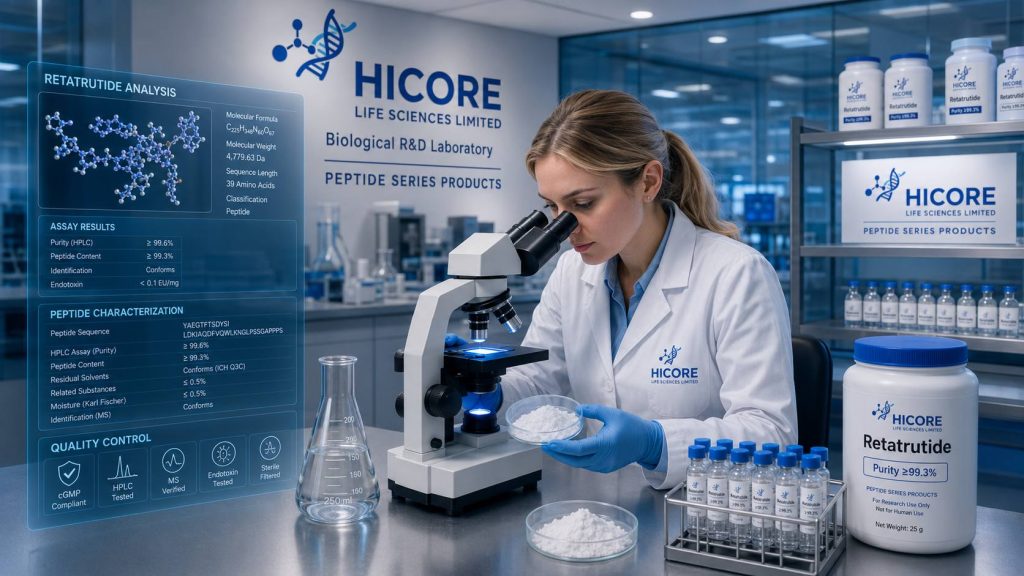
Retatrutide is an investigational triple hormone receptor agonist being studied by Eli Lilly. Its research profile involves glucose-dependent insulinotropic polypeptide, glucagon-like peptide-1 and glucagon receptors.
As of August 2026, Retatrutide has not been approved for public or commercial medical use. Lilly has reported positive Phase 3 topline results and has stated that it plans to submit an application to the FDA in the first quarter of 2027. However, regulatory review has not yet taken place.
Clinical findings reported by Lilly relate only to Lilly’s investigational clinical-trial material. They must not be interpreted as evidence that research materials supplied by a third party have equivalent composition, biological activity, safety or clinical performance.
Why Triple-Receptor Research Matters
The scientific value of Retatrutide research comes from the interaction of three receptor pathways in one molecular design.
GIP and GLP-1 pathways are widely studied in relation to glucose-dependent signalling, appetite-related biology and metabolic regulation. Glucagon receptor signalling introduces an additional area of interest involving energy metabolism, hepatic pathways and receptor balance.
For research organizations, this creates several possible non-clinical study areas:
- Receptor-binding and functional assay development
- Comparative GIP, GLP-1 and glucagon pathway studies
- Peptide identity and structural characterization
- Chromatographic method development
- Mass-spectrometric confirmation
- Stability and degradation analysis
- Formulation compatibility research
- Reference-standard and analytical-method qualification
The suitability of any material must be independently determined by the purchasing laboratory for its specific protocol.
What Current Scientific Evidence Shows—and Does Not Show
Published Phase 2 research and subsequently announced Phase 3 results have generated substantial scientific attention. Lilly reported significant changes in body weight and metabolic measures in several controlled clinical studies.
At the same time, trial reports have described gastrointestinal adverse events such as nausea, diarrhea, constipation and vomiting. Feeling changes described as dysesthesia were also reported in some Phase 3 study groups.
These findings support further scientific investigation, but they do not establish unrestricted safety, regulatory approval or equivalence between clinical-trial material and products found through online research-material channels.
Responsible scientific communication should therefore use terms such as “investigational,” “research-stage” and “under evaluation.” Expressions such as “approved treatment,” “guaranteed result” or “safe alternative” should not be used.
How Should Buyers Interpret Online Retatrutide Reviews?

Online discussions contain both positive and negative experiences. Some users describe reduced appetite-related thoughts or changes in perceived energy. Others report nausea, fatigue, sleep disruption, increased heart rate, inconsistent appetite response or no noticeable response.
These comments should be interpreted cautiously.
Online reviewers frequently cannot confirm:
- The true identity of the material
- The actual peptide content in each vial
- Batch purity or degradation level
- Storage temperatures during transportation
- Sterility or endotoxin status
- Whether multiple research compounds were combined
- Whether the material was reconstituted or handled correctly
A 2026 preprint reviewing online discussions identified recurring reports involving appetite changes, fatigue, nausea, sleep and heart-rate concerns. The authors also noted that source quality, dose variability, product combinations and misattribution could influence the reports.
For professional purchasers, online reviews are therefore best treated as market-intelligence signals—not as analytical or clinical evidence.
Seven Quality Questions Every B2B Buyer Should Ask
1. Is peptide identity supported by analytical evidence?
A product name printed on a vial is not proof of identity. Buyers should request mass-spectrometry data or another suitable identity test linked to the specific production batch.
2. Is the purity result batch-specific?
A general statement such as “high purity” is not enough. The Certificate of Analysis and HPLC chromatogram should identify the batch number, test method, test date and reported result.
Purity must be presented as a batch result, not as a permanent guarantee covering every future batch.
3. Can the supplier provide the original chromatogram?
An HPLC percentage without the corresponding chromatogram gives the buyer limited information. Qualified laboratories may need to review the main peak, related peaks, integration method and testing conditions.
4. Are content and packaging clearly defined?
The quotation, vial label, specification sheet and COA should use consistent units and product descriptions. Available content, number of vials, minimum order quantity and packaging configuration should not conflict across documents.
5. Are storage and transportation conditions documented?
Peptide materials may be sensitive to temperature, moisture and repeated freeze–thaw exposure. Buyers should confirm recommended storage conditions, packaging controls and the handling procedure for temperature excursions.
6. Is the intended use clearly restricted?
Research materials should be accompanied by an explicit statement that they are not intended for human consumption, clinical use, diagnosis, treatment, compounding or veterinary use.
The buyer and supplier should also review destination-country regulations before shipment.
7. Can the supplier support traceability and repeat purchasing?
For long-term B2B procurement, buyers may require:
- Batch-number traceability
- Retained samples
- Change-control communication
- Repeat-batch comparison
- Specification agreements
- Custom packaging or private labeling
- Technical-document review
- Pre-shipment sample qualification
These factors are often more important than a low initial quotation.
HICORE LIFE Retatrutide Research Material

HICORE LIFE supplies Retatrutide research peptide for qualified laboratory and analytical organizations.
The current product page lists multiple research specifications from 5 mg to 60 mg per vial, with ten vials per box. The featured specification is 30 mg in a 3 mL vial, and the listed minimum order is 100 boxes or 1,000 vials. Final specifications and availability must be confirmed during quotation.
Available batch and technical documents may include:
- Certificate of Analysis
- HPLC purity report and chromatogram
- Mass-spectrometry report
- Safety Data Sheet
- Product specification sheet
- Batch and packaging information
The controlling specification is always the released batch documentation. Website values should be reconciled with the final COA before purchasing or using the material in an analytical method.
Manufacturer-Direct Peptide Supply
Backed by 15 years of peptide manufacturing experience, our team focuses on manufacturer-direct support for research organizations, distributors, analytical laboratories and product-development businesses.
Our B2B capabilities include bulk research-material supply, multiple vial specifications, custom labeling, packaging support and batch-related quality documentation. Every inquiry is reviewed according to the requested specification, quantity, destination and documentation requirements.
For professional buyers, working directly with a manufacturing source may provide several practical advantages:
- More consistent communication about specifications
- Better support for bulk and repeat orders
- Access to batch-specific analytical documents
- Custom packaging and labeling options
- Improved coordination for qualification samples
- Direct technical discussion before production or shipment
Claims relating to manufacturing history, quality systems and production capability should always be supported by verifiable company and facility documentation during supplier qualification.
View the Retatrutide Product Page
Qualified research organizations can review the available specifications and request batch documentation through the official product page:
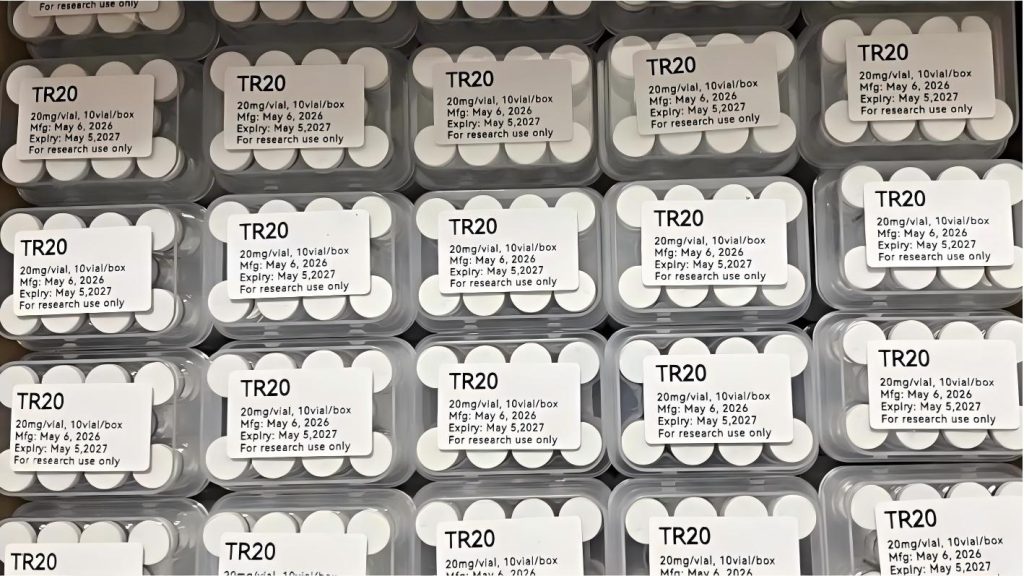
When submitting an inquiry, please provide:
- Required vial content
- Estimated quantity
- Destination country
- Target purity or analytical requirements
- Required COA, HPLC, MS or SDS documents
- Standard or customized packaging requirements
- Expected purchasing schedule
Providing complete information allows our technical and commercial teams to prepare a more accurate quotation.
Frequently Asked Questions
Is Retatrutide approved for medical use?
No. Retatrutide remains an investigational molecule and is not currently approved for public medical use. Research materials offered through this website are not medicines.
Can HICORE LIFE Retatrutide be used in humans?
No. It is intended only for qualified laboratory research. It is not intended for human consumption, clinical use, diagnosis, treatment, compounding or veterinary use.
What quality documents can be requested?
Depending on the batch and selected specification, available documents may include a Certificate of Analysis, HPLC chromatogram, mass-spectrometry report, Safety Data Sheet and product specification sheet.
Does a high HPLC percentage confirm complete product quality?
No. HPLC purity is only one part of material qualification. Identity, content, related substances, analytical method, storage history and other protocol-specific requirements may also need to be evaluated.
Can bulk packaging or private labeling be provided?
Bulk supply and customized labeling may be available following technical, commercial and compliance review.
Conclusion
Retatrutide represents an important direction in triple-receptor and metabolic-pathway research. Its scientific visibility has also created a market where unsupported claims, inconsistent specifications and unverifiable online materials can be difficult to distinguish.
Qualified B2B buyers should focus on evidence that can be reviewed: batch identity, analytical purity, documentation, traceability, storage controls and transparent intended-use restrictions.
HICORE LIFE supports professional research-material procurement with manufacturer-direct communication, multiple specifications and batch-related analytical documentation.
For laboratory research use only. Not for human consumption, clinical use, diagnosis, treatment, compounding or veterinary use.